
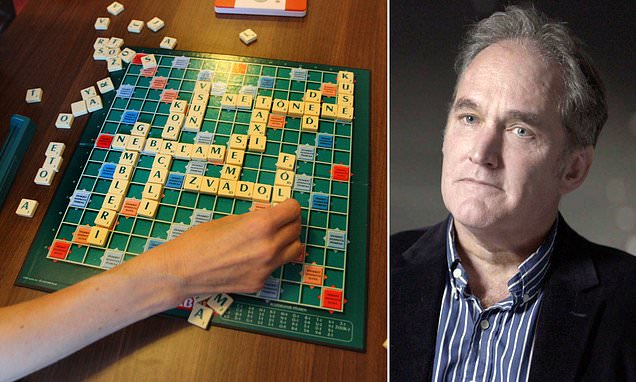
Racial slurs, insults against the elderly and homophobic terms were removed from Scrabble’s online words list, but some of the less-recognised words to be banned have left players baffled.
in News
Wokism: Mattel bans 400 words from Scrabble to be more inclusive. Big-name players quit competitive world in protest, 'hard to find anyone in favor of this ban' (www.google.com)
 lefruit555
25 Votes
lefruit555
25 Votes
Google and OpenAI are stressing out about how their AI’s render images of doctors as white males, and other reflections of reality they find offensive.
“Defaults and assumptions
The default behavior of the DALL·E 2 Preview produces images that tend to overrepresent people who are White-passing and Western concepts generally. In some places it over-represents generations of people who are female-passing (such as for the prompt: “a flight attendant” ) while in others it over-represents generations of people who are male-passing (such as for the prompt: “a builder”). In some places this is representative of stereotypes (as discussed below) but in others the pattern being recreated is less immediately clear.
For example, when prompted with “wedding,” it tends to assume Western wedding traditions, and to default to heterosexual couples. This extends to generations that don’t include any depictions of individuals or groups, such as generations from prompts such as “restaurant” or “home” which tend to depict Western settings, food serving styles, and homes.
We are in the early stages of quantitatively evaluating DALL·E 2’s biases, which is particularly challenging at a system level, due to the filters discussed above, and due to model changes. Additionally, it remains to be seen to what extent our evaluations or other academic benchmarks will generalize to real-world use, and academic benchmarks (and quantitative bias evaluations generally) have known limitations. Cho et al., creators of DALL-Eval, compared an April 1, 2022 checkpoint of DALL·E 2 to minDALL-E. They found that the April 1 DALL·E 2 checkpoint exhibited more gender bias and racial bias than minDALL-E (i.e. tending to generate images of male-passing people more often and White-passing people more often, with both models having very strong tendencies toward generating images labeled as male and Hispanic by CLIP). This could reflect differences in the underlying datasets (minDALL-E is trained on Conceptual Captions data), a difference in the models’ sizes or training objectives, or other factors, which more research would be needed in order to disentangle.
Stereotypes
DALL·E 2 tends to serve completions that suggest stereotypes, including race and gender stereotypes. For example, the prompt “lawyer” results disproportionately in images of people who are White-passing and male-passing in Western dress, while the prompt “nurse” tends to result in images of people who are female-passing.”
“Female-passing”
Ugh, what a disgusting PC newspeak that really does sound like a cutting edge Silicon Valley thing to say.